

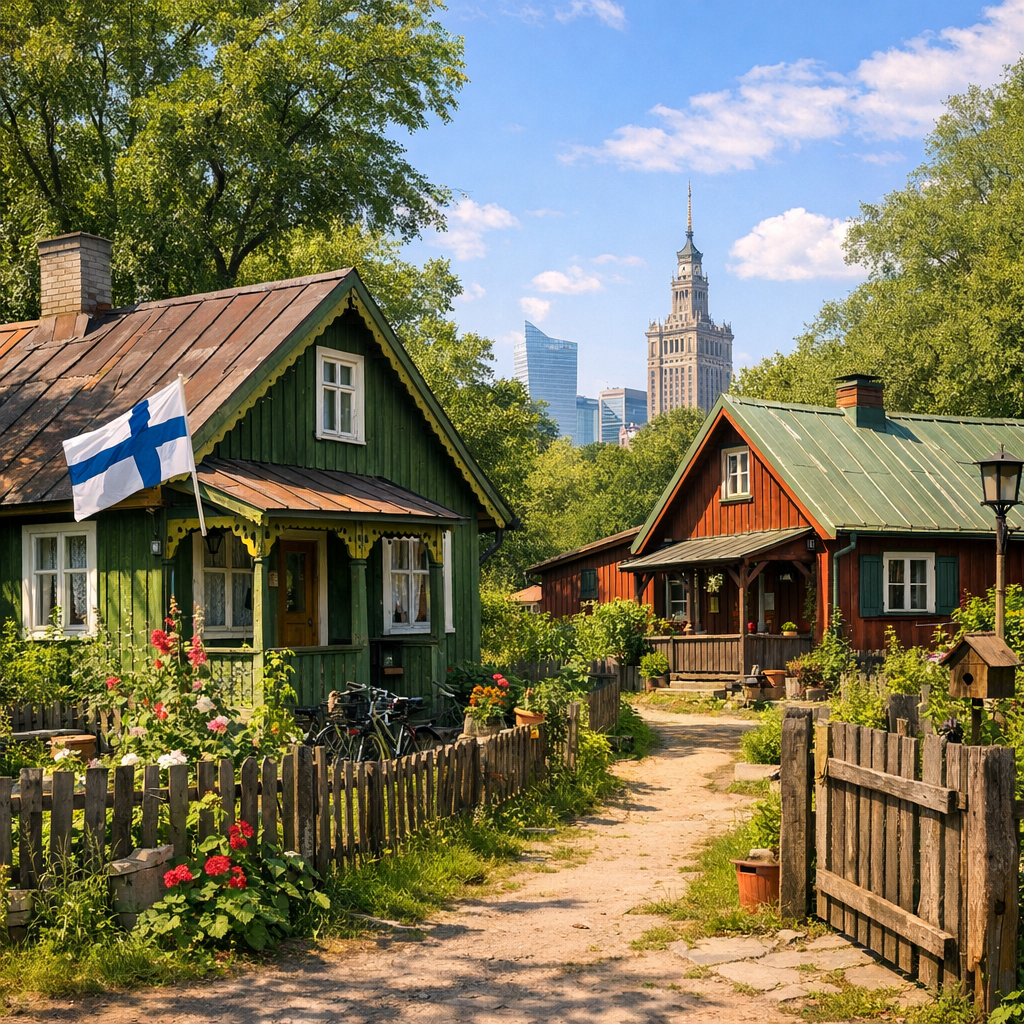
In the heart of Warsaw’s Jazdów district lies a unique enclave of wooden houses, known as the Finnish Houses, which have stood as a testament to the city’s post-war history and cultural resilience. Originally constructed in 1945 to accommodate professionals involved in rebuilding the capital, these structures have evolved into a vibrant hub for non-governmental organizations (NGOs), artists, and community initiatives.
However, recent developments have cast a shadow over this historic community. A growing dispute over rent increases and tenancy rules is putting one of Warsaw’s most distinctive communities at risk. NGOs based in Jazdów’s historic Finnish houses warn they could be forced out, as city officials defend new pricing policies and stricter lease conditions.
The long-running debate over Jazdów has entered a new phase, with tensions rising between city authorities and the nonprofit organizations that operate within the area’s historic wooden houses. At the heart of the issue are sharply increased rents and concerns over whether some groups will be allowed to stay.
Organizations associated with the Wolny Jazdów initiative say the situation has escalated beyond negotiation. In a recently published open letter addressed to national politicians, they accuse city officials of failing to engage in meaningful dialogue, despite earlier assurances.
Instead of talks, activists report being asked to vacate at least one of the houses and facing financial penalties for occupying municipal property without a valid lease. These developments have intensified fears that more groups could be forced out in the coming months.
The case has now attracted political attention. Figures including Deputy Senate Marshal Magdalena Biejat and former Ombudsman Adam Bodnar have stepped in, attempting to facilitate communication between both sides and prevent further escalation.
Jazdów, located just behind Ujazdowski Park, is one of Warsaw’s most unusual post-war sites. Built in 1945 using wooden houses originally transferred to Poland after World War II, the settlement once housed professionals involved in rebuilding the capital. Today, only a fraction of the original structures remain.
Over the past decade, many of these buildings have been repurposed by NGOs, artists, and grassroots initiatives, transforming the area into a hub for social, cultural, and educational activities.
The current conflict intensified earlier this year, when existing lease agreements expired.
The Finnish Houses are more than just buildings; they represent a living history and a testament to Warsaw’s resilience and creativity. The current situation underscores the delicate balance between preserving cultural heritage and addressing urban development needs. As discussions continue, the hope remains that a solution can be found that honors the legacy of Jazdów while accommodating the city’s evolving landscape.