

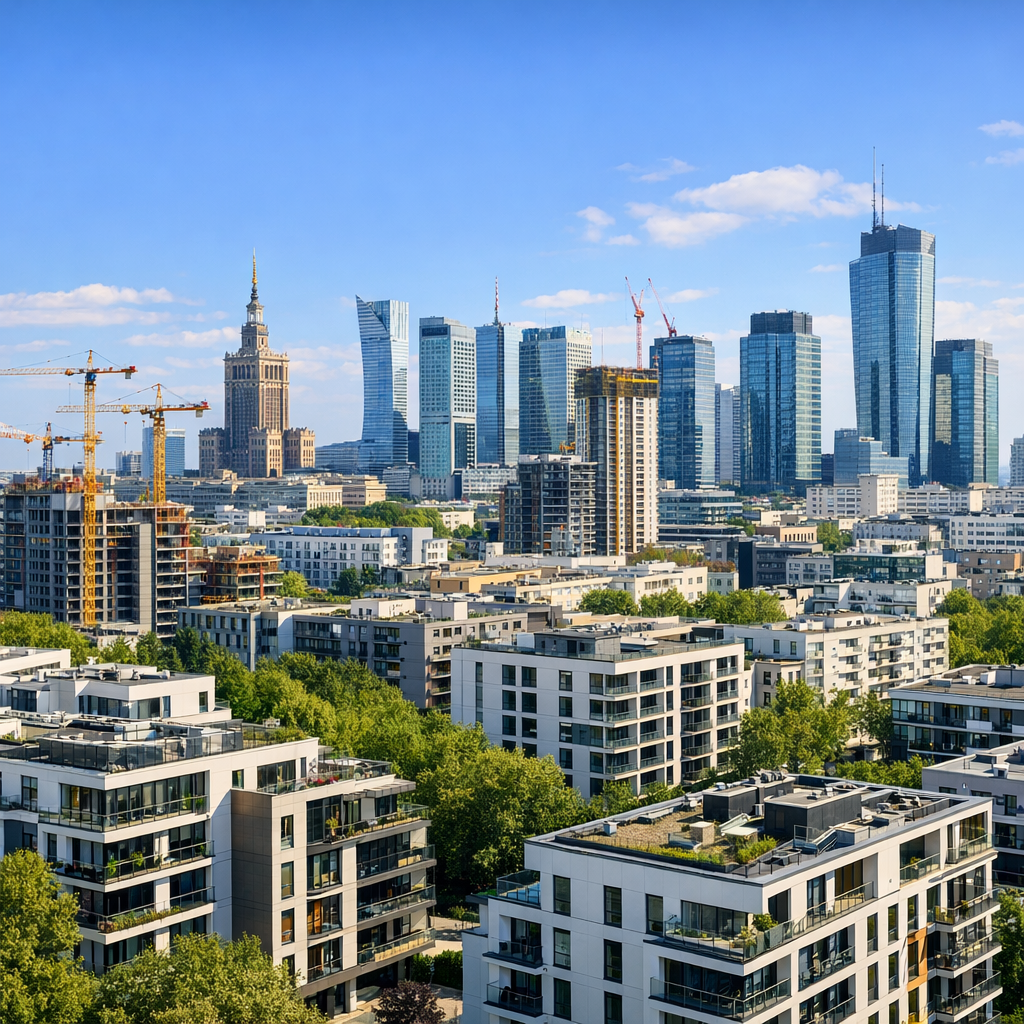
Warsaw’s real estate market has undergone significant transformations in recent years, presenting both challenges and opportunities for residents and investors alike. Understanding the current landscape is essential for making informed decisions.
Market Trends
As of mid-2026, the average price for new apartments in Warsaw stands at approximately 17,000–17,400 PLN per square meter. Secondary market prices range between 15,500–17,000 PLN/sqm, depending on the district, age, and condition of the property. This stabilization follows the transaction volatility experienced in 2022–2023.
Rental Market Dynamics
Warsaw remains Poland’s most expensive rental market, with citywide average rents around 3,500–4,000 PLN as of early 2026. This premium is attributed to the city’s concentration of corporate headquarters, international institutions, universities, and government functions, which sustain a diverse and resilient tenant pool.
Gross rental yields vary across the city, ranging from approximately 3.5% in central districts to 6.9–7.0% in well-connected outer neighborhoods like Bielany and Bemowo.
Key Districts to Watch
Wola
Wola has emerged as Warsaw’s fastest-appreciating district over the past three years, becoming home to the city’s emerging financial center. Two-bedroom developer units in Wola’s business corridor average 1,050,000 PLN for 55 sqm.
Mokotów
As an established residential mid-market area, Mokotów offers 60-90 sqm renovated apartments in the 1.2–2.0 million PLN range. It appeals to long-term tenants, particularly corporate expatriates and diplomatic staff. Yields are moderate at 4–4.5%, but vacancy risk is low.
Praga-Południe and Praga-Północ
These east-bank districts are undergoing significant regeneration. Praga-Południe features two-bedroom prices of 960,000–1,020,000 PLN, supported by metro extension completions and an influx of hospitality and lifestyle investments.
Considerations for Buyers and Investors
For those looking to enter Warsaw’s real estate market, it’s crucial to consider factors such as location, property condition, and potential rental yields. While central districts offer prestige, outer neighborhoods may provide better returns on investment. Staying informed about ongoing developments and infrastructure projects can also guide strategic decisions.
In conclusion, Warsaw’s real estate market presents a dynamic environment with opportunities across various segments. Whether you’re a prospective homeowner or an investor, understanding the nuances of each district and staying abreast of market trends will be key to making sound decisions.