

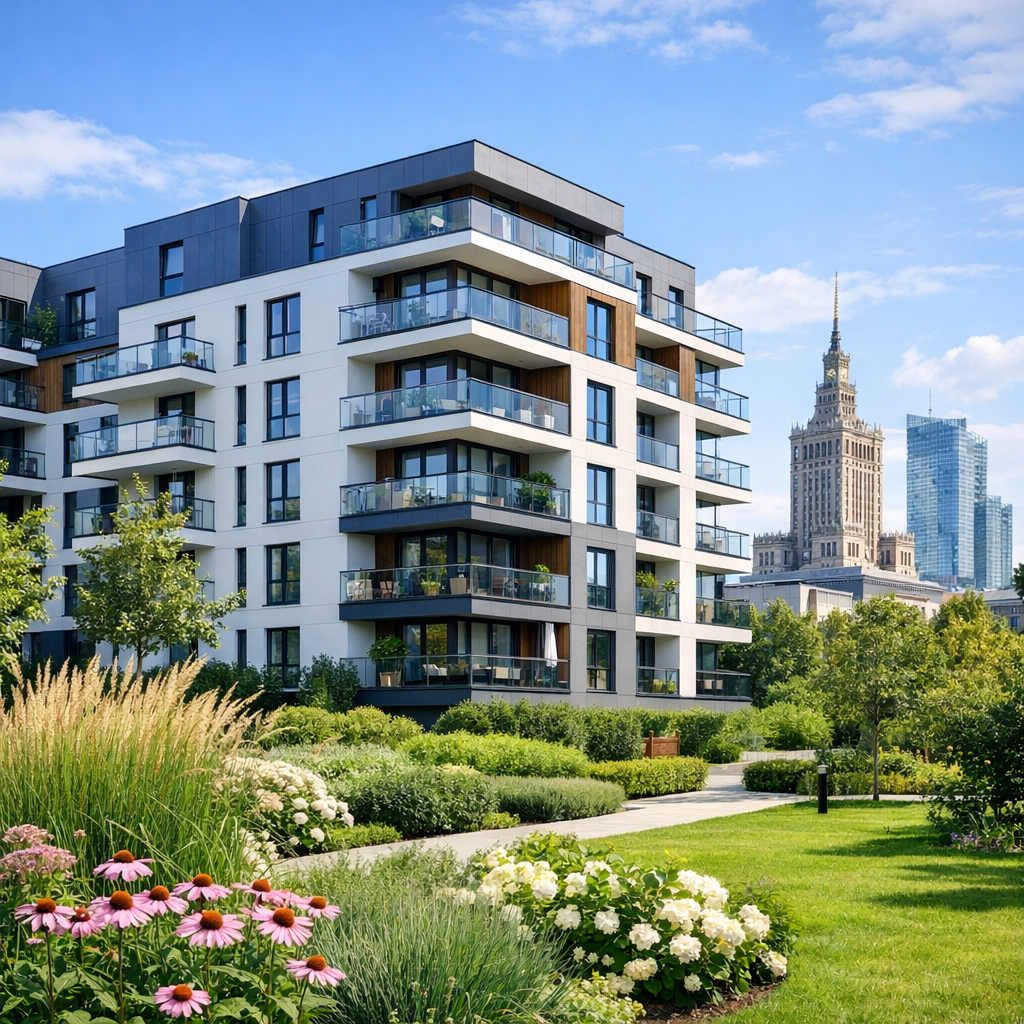
Warsaw’s housing market remains dynamic, with recent data showing steady prices, active new-builds, and clear differences depending on location and housing type. Whether you’re looking to rent, buy, or track developments, here’s what anyone living in or moving to Warsaw needs to know.
How Much Does Renting Cost, and Where
Median rents really depend on district, size, and how new or high-end the flat is. The average 2-room apartment across Warsaw goes for about PLN 5,000/month. But in quieter, more suburban districts like Białołęka or Rembertów, you can find similar flats for under PLN 3,000/month. In the city centre—Śródmieście, Wola, Wilanów—expect to pay significantly more.
Rent by District: What You Get
- Śródmieście: the most expensive, premium flats close to amenities and transport.
- Wola: modern, often new-build units; strong appeal for professionals.
- Mokotów, Bielany: more greenery, calmer feel; somewhat lower rents but still well-served by public services.
- Białołęka: newest supply, especially for families, but further from metro lines.
Buying Power & New Builds
The gap between primary (new-build) and secondary (used) market prices in Warsaw is narrower than one might expect. New-builds are on average around PLN 15,500/m², whereas market averages for second-hand flats are in the high sixteen-thousands per m².
More than 200 new residential projects are active, offering thousands of units across Warsaw. Developers are pushing into suburbs and fringe districts, presenting options that balance cost, amenities, and space.
The Private Rented Sector & Type of Supply
Professionally managed rentals, including PRS (Private Rented Sector) projects, are becoming more visible. These units tend to be smaller—around 40 m²—and come with higher standards and more services. They cost more, but for tenants who value convenience, it may be worth it.
Meanwhile, demand remains strong—among students, internationals, and commuters, especially for flats that are move-in ready and close to transport. Rural-style or single-family options appear more on outskirts and are less common inside most districts.
Planning, New Development & Growth Areas
Several municipal plans are pushing development in areas like Wilanów, Białołęka, Powsinek, and Bemowo. Planning includes not just new housing, but transport links, green spaces, and infrastructure.
Projects such as Westo Wola are adding hundreds of apartments in districts expected to benefit from improvements in transit and services. For buyers, this means looking beyond the centre may yield better value—if connectivity and amenities are developing too.
Tips for Buyers & Renters in Warsaw
- Check both “asking price” (for new builds) and “transaction price” (secondary market) to avoid surprises. The former may be higher than what people actually pay.
- Consider total costs: maintenance fees, heating, parking, and commuting time all add up—especially in outer districts.
- When you can, visit recently completed PRS units or new-builds to understand finishes and management. That affects both comfort and long-term costs.
- For renters: proximity to metro or tram lines can justify higher rent, but walkability, shops, green spaces matter for daily life.
- If buying, think long-term: areas with planned infrastructure, future transit extensions, are more likely to retain or increase value.
Warsaw’s housing market is complex but full of opportunity. Whether you’re renting for now or buying for later, knowing what to look for—district, type of housing, future plans—makes all the difference.