

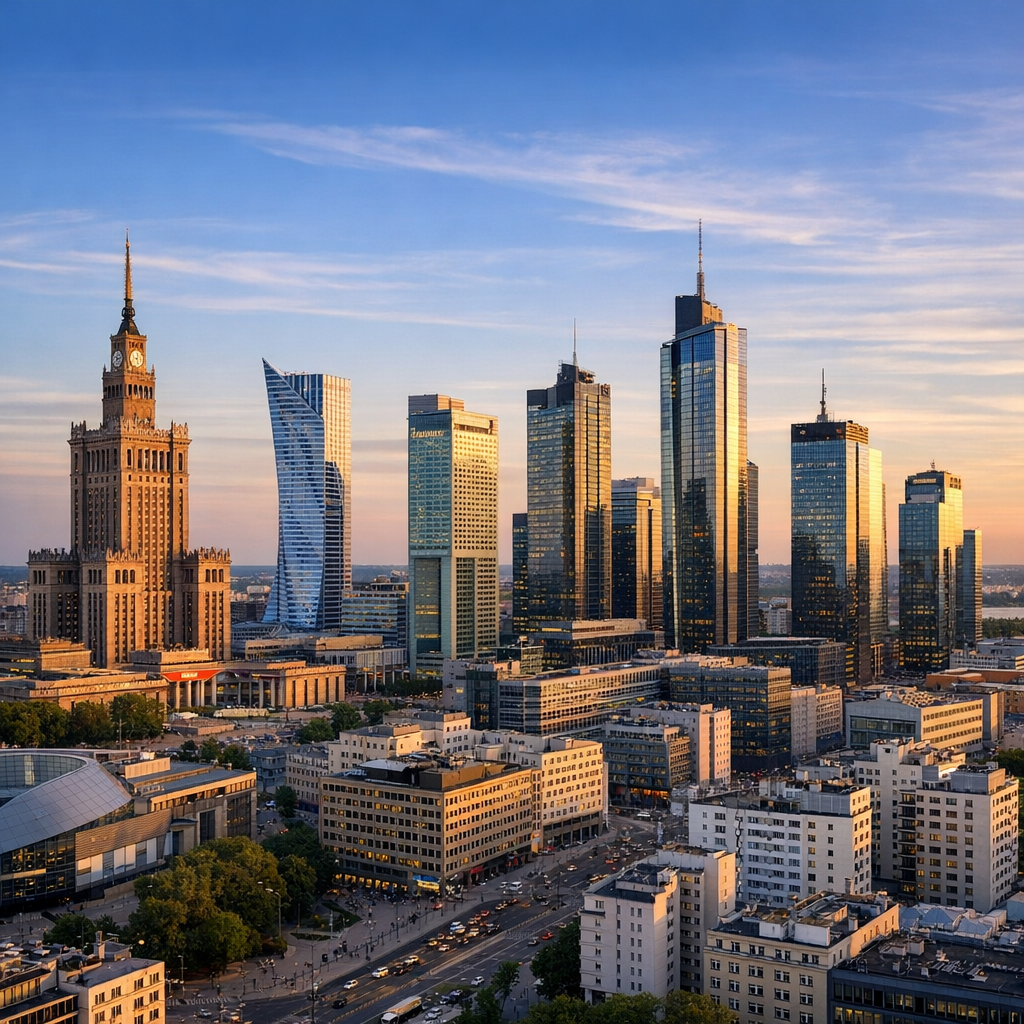
Warsaw’s economy is in a state of selective change—with encouraging signs for entrepreneurs amid headwinds in certain sectors. Below are key business and labour trends shaping local opportunity.
Steady Growth in New Business Formation
The number of entities registered with REGON in Warsaw continues to climb. As of July 2026, there were over 610,000 active business entities in the capital—roughly 3–4% more than a year earlier. In that same period, both commercial companies and sole proprietors saw increased registration activity.
Employment: Stability with Shifting Patterns
The labour market remains strong by national standards. Unemployment in Warsaw holds near historic lows around 1.5–1.6%, far below the national average. But total enterprise-sector employment has slightly slipped year-on-year—losses most prominent in hospitality, real estate services, trade, transportation, and administrative support. Roles in professional, scientific & technical services, information & communication, and construction have shown modest gains.
Wage Growth and Sectoral Imbalances
Average gross wages in Warsaw are rising—up over 6% annualy—with information & communication and scientific/technical sectors paying notably above average. But industries like accommodation and admin services lag significantly, with wages in those sectors up to about 30% below the overall mean.
Construction Cooling, Retail and Trade Holding Up
Construction is entering a correction phase: while permits remain steady, housing completions have dropped significantly compared to a year ago, and output is down. On the other hand, retail and wholesale trade continue to grow—wholesale especially strong—reflecting ongoing consumption demand.
Warsaw as a Business Services Hub
Warsaw solidifies its place as Poland’s leading centre for business services. The capital hosts over 400 business services centres (many foreign-invested), employing more than 110,000 people—around a quarter of that sector nationally. Key strengths: skilled talent pool, attractive infrastructure, stable business environment.
What Entrepreneurs & Employees Should Watch
- Focus on sectors with rising employment—especially knowledge-based services and ICT.
- Prepare for tougher competition and cautious expansion in construction and hospitality.
- Consider wage disparity: jobs in certain sectors may offer significantly higher pay, but access and skill demands vary.
- Leverage Warsaw’s status as a services hub—it’s a strong base for scaling operations or finding specialized roles.
Overall, Warsaw remains one of Poland’s strongest economic centres. For business owners, job seekers, and investors, the city offers opportunity—especially for those who can adapt to its evolving sectoral landscape.